
R.S. Beulah | Advocate | Psycho-Legal Consultant | Author – Relationships, Clarity & Healing
If you’re living in the U.S. or the U.K., and both of you have already reached a point where continuing the marriage no longer feels right, your questions are no longer emotional.
They are practical. And often urgent.
You may be wondering whether you need to travel back to Chennai, whether court appearances are unavoidable, or whether this can be completed from where you are. Along with that comes a quiet concern — will this become complicated just because we are not in India?
The answer is simpler than you think.
If both of you agree, a mutual divorce can be filed in Chennai or anywhere in Tamil Nadu under the law that applies to your marriage, even if you are living abroad. You do not need to relocate to India to complete the process. What matters is whether there is a real connection to Chennai — such as having lived here together, having your marriage take place here, or having a family or residential base here. In most situations, that is enough for the court to accept your case.
Where most people feel stuck is not in deciding to separate, but in understanding how to move forward from a different country. It can feel like something that will require multiple trips, repeated court visits, and unnecessary disruption to your current life.
But when handled properly, it does not have to be that way.
Once both of you are clear about the decision and the terms — whether it involves financial settlement, child-related arrangements, or simply a peaceful separation — the legal process begins with preparing a mutual divorce petition. This document records your shared understanding and becomes the foundation of the case before the Family Court.
If you are unable to travel, there is a practical way to handle this. You can authorise someone in India through a Power of Attorney to act on your behalf. This is a commonly used and accepted approach when couples are living abroad. The document is executed and attested in your country of residence, and your authorised representative can then take care of filing and appearances in court.
This is usually the point where most people feel relieved — because the process no longer depends on their physical presence.
Another common concern is whether you will still be required to appear in person at some stage. In many cases, travel can be reduced or even avoided entirely. Courts today are open to structured representation, and in appropriate situations, even remote participation may be considered. What makes the difference is not the distance, but how clearly and carefully the process is handled.
Time is another area where uncertainty creates anxiety. It often feels like divorce proceedings will take years, but mutual divorce is not meant to be prolonged. When both parties are clear and there are no unresolved issues, the process can move forward without unnecessary delay. In some situations, it can even be completed in a shorter timeframe with the court’s permission. Where delays happen, it is usually because of incomplete documentation, unclear terms, or lack of coordination — not because the process itself is complicated.
You might also be wondering whether everything can be done “online.” While there is no fully digital system yet, most parts of the process — from drafting and documentation to coordination and certain stages of hearing — can be managed without you needing to be physically present in India. When structured properly, distance does not become an obstacle.
When it comes to cost, there is no fixed figure that applies to every situation. Each case involves a different level of coordination, especially when it is being handled across countries. The most accurate way to understand the cost is to look at your specific circumstances and the work required to complete the process smoothly from where you are.
What becomes clear in most NRI cases is this: the difficulty is rarely in the decision itself. It lies in uncertainty — not knowing the correct process, receiving fragmented advice, and worrying about complications that may not even arise. But when both individuals are aligned, mutual divorce does not have to become another stressful chapter. It can be handled in a way that is clear, respectful, and contained.
If you have reached a point where you are seriously considering filing for mutual divorce in Chennai while living in the U.S. or U.K., you are already in the stage of taking action. At this stage, what you need is not more scattered information, but a process that gives you clarity and moves you forward without unnecessary friction.
If You’re Ready to Move Forward
You may write to adv.rsbeulah@gmail.com
or connect via Instagram @rsbeulah
Disclaimer & Copyright
This blog is written by R.S. Beulah, Advocate & Psycho-Legal Consultant, for general awareness and understanding. It does not constitute legal advice or solicitation. Each case depends on its own facts and must be assessed individually in accordance with applicable legal principles and professional standards.
© RSB Legal Firm. All rights reserved.
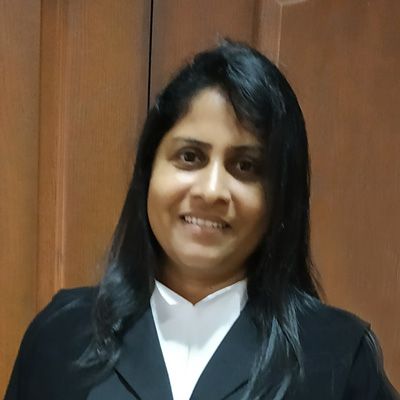
Legal Insights by Beulah – Expert in Legal Strategy & Psycho-Legal Consultation
I am a practicing advocate at the Madras High Court, specializing in family law, High Court litigation, Supreme Court matters, and psycho-legal consultation. With a strategic and solution-driven approach, I help clients navigate complex legal issues with clarity and confidence.
My expertise extends beyond legal representation—I integrate legal knowledge with psychological insights to offer practical solutions for matrimonial disputes, divorce strategies, custody battles, legal notices, and High Court matters. Whether you need a well-planned legal defense, a step-by-step action plan for your case, or psycho-legal counseling for decision-making, I ensure that every legal step is taken with precision and foresight.
If you're looking for expert legal strategy, practical solutions for family disputes, or professional legal representation in High Court and Supreme Court matters, I am here to guide you.
Got a story to share? Whether it’s about your legal journey or a life experience, I’d love to hear from you! Drop me an email at adv.rsbeulah@gmail.com – let’s talk.
- Call Now: Click to Call
- Chat on WhatsApp: Chat Now
- Book a Consultation: Schedule Here
Take charge of your legal situation today with expert guidance and strategic legal action!